
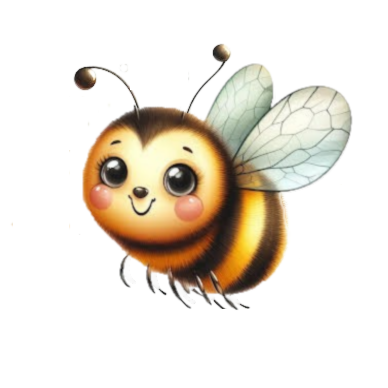
Apis mellifera
If you’ve ever caught yourself ducking or swatting when a small buzzy insect flies past your ear, you’re not alone. Many gardeners love the idea of a vibrant, flowering yard, but feel a wave of anxiety the moment a bee enters the scene. The natural reaction is often fear—fear of getting stung or dealing with an aggressive pest.
At Native Green Garden Supplies, we want to change that narrative. That’s where our mascot, Melli, comes in. And we want EVERYONE to join the global movement to save pollinators.
Where Did Melli Get Her Name?
Melli isn’t just a cute name we picked out of a hat. It comes directly from her species! Melli is a honey bee, known scientifically as Apis mellifera. In Latin, mellifera translates to “honey-bearing.”
Melli was created to represent the quiet, hard-working side of nature: the tireless pollinators that make our flowers bloom, our fruit trees bear, and our ecosystems thrive.
Not All Bees Are Out to Get You
One of the biggest misconceptions about bees is that every single one is looking for a fight. In reality, most bees are gentle, solitary, and far too busy working to care about humans.
Take the Carpenter Bee, for example. You’ve likely seen these large, shiny, black-and-gold bees hovering near wooden porches or fences. They get their name because they bore precise, perfectly round holes in dead wood to create nest chambers for their young. While their size and noisy hover can feel intimidating, carpenter bees are surprisingly docile. Male carpenter bees—the ones that often fly up to “check you out”—don’t even have stingers! They are simply territorial, harmless hoverers playing defense for their nests.
Beyond honey bees and carpenter bees, nature is filled with thousands of unique species:
- Mason Bees: Gentle, solitary bees that use mud to build tiny nest chambers and rarely sting.
- Bumblebees: Fuzzy, social pollinators that use a technique called “buzz pollination” to shake pollen loose from tomato and pepper blossoms.
- Leafcutter Bees: Precise little architects that snip neat, round circles out of leaves to line their nests.
Most bees only sting as an absolute last resort if they feel crushed or if their main hive is directly threatened. When they’re out foraging among your flowers, they are completely focused on nectar and pollen.
Why Pollinators Matter to the Planet
Bees are the silent force behind global biodiversity and food security. Over one-third of the food we eat every day—from apples and almonds to berries and squash—depends directly on insect pollination. Without them, natural food chains crumble, wild plant populations decline, and crop yields plunge.
Because pollinators face growing threats from habitat loss, pesticides, and changing climates, protecting them has become an urgent international priority.
A Global Movement: UNESCO and Beekeeping
The effort to protect pollinators reaches far beyond individual backyard gardens. International organizations, including the United Nations Educational, Scientific and Cultural Organization (UNESCO), have launched dedicated beekeeping programs and education initiatives across the globe.
Through these programs, UNESCO works with local communities, indigenous groups, and biosphere reserves to train new generations of beekeepers. These initiatives combine traditional ecological knowledge with modern sustainable practices to protect native bee populations, restore local habitats, and build sustainable livelihoods.
Bringing It Back to Your Garden
Saving the bees doesn’t require keeping a commercial hive in your yard. It starts with simple, local actions:
- Plant Native Flowers: Provide nectar and pollen throughout the spring, summer, and fall.
- Skip the Synthetic Chemicals: Avoid harsh pesticides that harm beneficial insects.
- Leave a Little Raw Ground or Wood: Give solitary species like ground-nesting bees and carpenter bees a place to rest and nest.
When we understand bees instead of fearing them, we can shift from swatting to supporting. Every time you welcome pollinators like Melli into your garden, you become part of a vital, global movement to keep our planet green and growing.
More about Native Pollinators
To explore the science behind native pollinators and learn more about conservation efforts, check out these trustworthy educational resources:
Xerces Society for Invertebrate Conservation — An international non-profit providing detailed research on wild bee species, solitary bee life cycles, and habitat conservation strategies.
USGS Bee Lab at the Eastern Ecological Science Center — A government research team tracking thousands of native North American bee species and their roles in local plant ecosystems.
National Wildlife Federation — Bees Guide — A comprehensive resource detailing bee biology, nesting behaviors (like carpenter and mason bees), and how pollination supports the broader food web.
USDA Bee Basics Guide — An educational publication breaking down the structural differences between native pollinators and honey bees, non-aggressive behaviors, and ecosystem functions.
Small steps lead to big blooms. Are you ready to grow a healthier, pest-resistant garden, naturally? Learn which plants thrive together and double your yield. We want EVERYONE to join the global movement to save pollinators.
Get your FREE guide, The Beginner’s Guide to Companion Gardening.
Thank you for visiting. I hope you found something useful.
John Lewis

Leave a Reply